
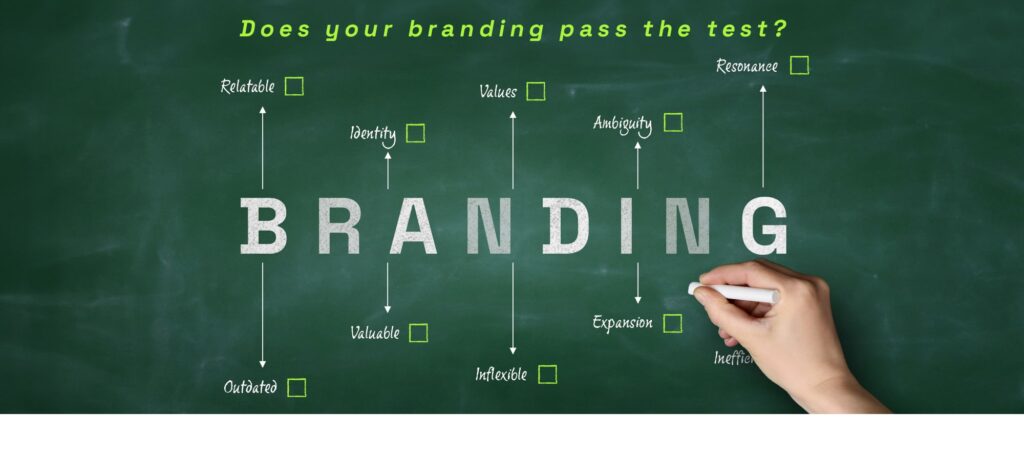
As you grow, diversify or face new competition, your brand needs to stay relevant
Your brand is more than just a logo — it’s the personality, promise and perception of your business. But like any business asset, it can age or become less effective over time. So, how do you know when your brand needs a refresh — and whether that refresh should be a gentle evolution or a wholesale rebrand?
Signs a Brand Needs a Refresh
Recognising when your brand is losing its effectiveness is key to staying competitive. Here are some of the most common signs that it might be time for a brand refresh:
- Your Brand Looks Outdated: If your logo, colour palette, or fonts feel stuck in the past, they may be alienating new customers. A modern, polished look signals that your business is current and forward-thinking.
- You’re Not Standing Out: In a crowded market, a generic or forgettable brand can cause you to blend in with competitors. A unique visual identity is essential for capturing attention and communicating your value.
- Your Mission Has Evolved: As businesses grow, their values and services can change. Your current brand may no longer accurately reflect who you are or what you offer. A refresh ensures your brand messaging aligns with your business goals.
- You’re Struggling to Attract the Right Customers: If you’re not connecting with your target audience, your brand might be a mismatch. A refresh can help you speak directly to your ideal customer and build a stronger, more meaningful relationship.
Refresh vs. Rebrand: How to Decide
The decision to simply evolve your brand or undergo a complete overhaul depends on the scale of the problem.
- Evolve (The “Polish”): This is the right choice when your core brand identity is still strong but needs a modern update. An evolution keeps the foundational elements that customers recognise, like a well-known logo shape, but refines them. It’s about setting a more consistent standard for fonts, colours, and styling to ensure your brand feels cohesive and current. This approach is less risky and ideal for established businesses with a loyal customer base who don’t want to lose brand recognition.
- Rebrand (The “Wholesale Change”): A full rebrand is necessary when your brand has deep-seated issues or is no longer relevant. This involves starting from scratch—creating a new name, logo, mission statement and visual identity. A wholesale change is a major undertaking but is often essential for businesses that have gone through a significant pivot, have a negative reputation, or are expanding into entirely new markets where the old brand just won’t work.
Essentially, an evolution is about refinement and consistency, while a rebrand is about transformation and new beginnings. The key is to be honest about your brand’s current state and your long-term goals to make the right choice.
Brand Refresh vs. Rebrand: Decision Checklist
Brand Refresh vs. Redesign: 10-Questions Diagnostic
rate each statement from 1-5
(1= not at all true, 5= very true)
| Question | What a high score suggests |
| 1. Our brand no longer reflects who we are or what we offer | Redesign |
| 2. Our visual identity (logo, colours, typography) feels outdated or inconsistent. | Refresh |
| 3. Our core mission, values, and positioning have changed significantly. | Redesign |
| 4. Customers or employees are confused about what we stand for. | Redesign |
| 5. Our brand still resonates emotionally with our audience. | Refresh (if low, consider redesign) |
| 6. Competitors’ brands look and feel more modern or relevant. | Refresh (or redesign if gap is large) |
| 7. Our current brand assets don’t work well across new channels (social, mobile, etc). | Refresh |
| 8. We have strong brand recognition and equity we don’t want to lose. | Refresh |
| 9. We’re targeting new markets, audiences, or product categories. | Redesign |
| 10. The team spends excessive time adapting or fixing brand inconsistencies. | Refresh |
––––––
🧭 How to Interpret the Results
- Mostly 1–3s: Your brand is in good shape — a light refresh (visual updates, messaging tweaks) may be enough.
- Mostly 4–5s in visual or tactical areas: You need a brand refresh — modernised look, refined tone, tightened consistency.
- Mostly 4–5s in strategic or audience areas: It’s time for a complete redesign — repositioning, new narrative, full identity system.
Rule of Thumb:
- Refresh when your brand has equity worth protecting but needs consistency, modernisation, or better digital application.
- Rebrand when your current identity holds you back, misrepresents you, or fails to resonate with your future market.
––––––
A brand refresh has the power to unlock new potential
A rebrand—whether it’s a full transformation or a carefully considered refresh—can be a powerful catalyst for growth, clarity and renewed confidence. For the business, it provides the opportunity to sharpen its positioning, stand out in competitive markets, and ensure its identity truly reflects its vision, values and ambitions. For employees, a rebrand can reignite pride and create a sense of unity, giving them a clear and consistent narrative to rally behind. And for customers, it offers clarity, trust and an enhanced experience—making it easier for them to understand what the business stands for and why it matters to them. Done well, a rebrand doesn’t just change how a company looks; it re-energises how it communicates, connects and grows.